Table Of Content

Simulations can be uniquely adapted to individual student’s learning speed and abilities, and fine-tuned in ways never before possible in the classroom. One key component of UDL is creating flexible physical environments that take into account learner needs. With the increasing integration of technology into instruction, UDL is being seen across a wide range of curricula.
Understand the Social Needs for Accessibility in UX Design
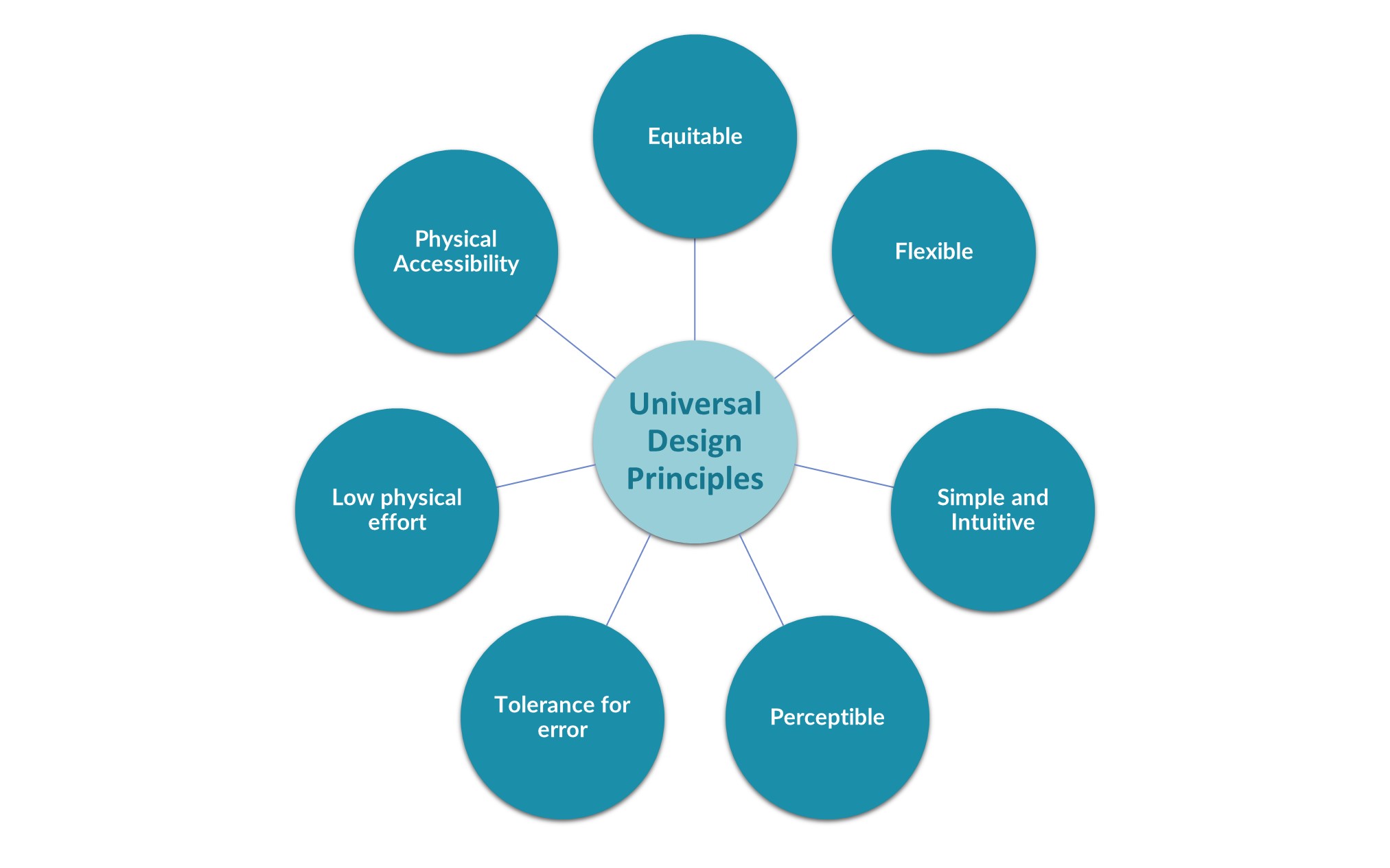
The idea behind this principle is for a design to effectively relay critical information to users, taking into account different environmental conditions or individual sensory capabilities. By following 7 principles, designers can design for all, building user-centered designs, developing solutions that accommodate the needs of as many users as possible. The design of products and environments to be usable by all people, to the greatest extent possible, without adaptation or specialized design. For example, high contrast should be used in digital designs in order to ensure color-blind users can see all the content on a screen. They provide consulting, technical, and research services, as well as lectures, workshops, and conferences to promote education on universal design. One methodology that can help as we explore universal design is that of mental models.
Universal Design for Learning Strategies and Examples for the Classroom
Universal design reminds us that age and abilities (physical and mental) impact our experiences. Whether people give voice commands to their devices, use desktop video magnifiers, or employ a different sort of adaptive technology, designers must consider their needs and how we can improve their experiences. For product designers, their focus is on form factors such as the size of and space involved with the product. As digital designers, our focus is less on form factors but more on what is on the screen. This is a shortsighted mindset because it is important to think outside of the screen and consider our users’ environment as well, especially as users view websites not only on desktops but also—increasingly—on mobile devices as well. As you can see, most of the guidelines for this principle apply more to product and environmental design.
19 Universal Design Principles to Consider When Remodeling Your Kitchen - Better Homes & Gardens
19 Universal Design Principles to Consider When Remodeling Your Kitchen.
Posted: Sat, 27 Aug 2022 07:00:00 GMT [source]
Guidelines for Flexibility in Use
By watching where Zoomtext enhances their designs, UX practitioners can see what causes problems for users. It reduces visual clutter and removes irrelevant information on the screen. It prioritizes information to display on the screen based on user needs and interactions. On top of that, it allows the user to drill in for more information, usually without a page load.
Tips on How To Make a Website Digitally Accessible
You can also find helpful information from the National Center for Universal Design for Learning (NCUDL). SplashLearn inspires lifelong curiosity with its game-based PreK-5 learning program loved by over 40 million children. With over 4,000 fun games and activities, it’s the perfect balance of learning and play for your little one. His work has involved designing teacher certification for Trinity College in London and in-service training for state governments in the United States. He has trained kindergarten teachers in 8 countries and helped businessmen and women open baby centers and kindergartens in 3 countries.
How is universal design different from providing “accommodations” to individuals with disabilities?
Including Design for All early in the design process is more cost-effective than making alterations after solutions are already in the market. It should be a practice and a commitment to creating products that are usable and enjoyable for everyone, regardless of their disabilities. So, whether you’re launching a new website or updating an existing one, we’re here to guide you through your journey into accessibility and compliance. Check out our suite of accessibility tools and services to make your digital spaces inclusive – in minutes. Schedule a friendly consultation or kick off your journey with a free trial today. This approach fosters a more inclusive society where individuals with disabilities can participate fully in all aspects of life without facing unnecessary barriers.
What is the definition of UD?
Over a decade later, confined capacities of playhouses everywhere are giving way to universally designed playgrounds and spaces. Universal Design (UD) is largely defined as the process of creating products that are usable by people with the widest possible range of abilities, operating within the widest possible range of situations. Simply put, it is moving beyond making specific things adequately accessible. Now it is about removing barriers completely and seamlessly, creating flowing spaces to be utilized by any person with or without assistance regardless of age or ability. The most important international work on accessibility is the Convention on the Rights of Persons with Disability (CRPD).
Users of all ability levels will face challenges in certain environments. These could be busy, highly distracting, or even potentially dangerous situations. So, keep in mind your users’ concentration level, fatigue, and other factors. When teachers use UDL principles in their instruction, students learn more and achieve better outcomes. UDL provides ways to meet the needs of all learners, including those who are traditionally marginalized or left behind.
Planning for Universal Design - Planetizen
Planning for Universal Design.
Posted: Fri, 10 Dec 2021 08:00:00 GMT [source]
Lets us tailor your digital ads to match your interests, making them more relevant and useful to you. You’ll enjoy a smoother, more personalized journey without compromising your privacy. Saves your settings and preferences, like your location, for a more personalized experience. Google Docs offers Keyboard shortcuts for users to work with Google Sheets more efficiently.
In inclusive design, you go the extra mile to target the needs and experiences of groups that “mainstream” design often marginalizes or excludes. When you set out to create an inclusive design, you especially account for the diverse perspectives and backgrounds of your users. In your design process, you include users from different ethnicities, genders, and/or with cultural differences, varying language abilities and preferences, and more. Inclusive design results in products and services that all users find accessible, usable, culturally sensitive, and welcoming.
Make study-time fun with 14,000+ games & activities, 450+ lesson plans, and more—free forever. Watch your kids fall in love with math & reading through our scientifically designed curriculum. The basic premise of UDL is that each and every lesson has to take into account the incredible range of student characteristics that exist in the classroom. This makes the teacher’s job ever more challenging and is another reason these dedicated professionals play a key role in the advancement of society.
By considering the spatial requirements of a diverse range of users, designers can create environments that are comfortable and accessible to everyone. Examples include ample turning space for wheelchair users, reachable shelves and cabinets, and knee clearance under countertops and desks. While the universal design may seem like a modern idea, its roots can be traced back to the 1970s. The movement began with architect Ron Mace, dedicated to barrier-free environments. Mace, a wheelchair user, understood firsthand the challenges faced by people with disabilities when navigating the built environment. His personal experiences fueled his passion for creating spaces that were accessible and usable by everyone.




No comments:
Post a Comment